Week 01
01/13/25
Introduction:
Syllabus & Expectations
00
Course
Intermediate Type II
DSD-3612-E
Tuesdays
03:20PM – 06:10PM
01/13/26 – 04/28/26
School of Visual Arts
209 East 23 Street
Room 302 Studio
Instructor
Philip DiBello
Partner, No Ideas
philip@noideas.biz
Course Description
This course will provide an emphasis on developing your sensitivity to typography. We will discuss when and why certain typographic choices feel relevant, and how they are employed in your design. This will be accomplished by both restrictive and open-ended assignments. Projects will be a combination of formal and experimental exercises with a focus on typographic systems. Together we will discover the details of macro and micro typography.
Central discussion themes of this course include theory, dialogue, process and personal practice. The goal is to inform your personal opinion about design. Classes are a combination of critique and one-on-one meetings with occasional guest lectures and critiques.
Throughout the semester readings will be assigned alongside each project. They are central to your comprehension of the task at hand. Read them carefully and do your best to challenge the thoughts written within the essay.
Student Expectations
This course assumes you already have knowledge of fundamental design and typographic principals. Some assignments will be open ended. You must take initiative in every project and make it your own. You’re expected to engage in critique, both by giving and receiving feedback. Treat others as you would like to be treated. Lead with kindness, empathy, generosity, open-mindedness and mutual respect.
Know there will be general costs required for materials such as paper and color prints as well as hand tools like knives, blades and rulers. Craft is a critical component to your assignments, understand that frayed, crumpled, ripped and uneven work is not acceptable.
Most of our crits will be group-oriented. Be prepared to be printing and hanging work every session (print ahead of time, not right before class. There is always a queue). We will make four books this semester and two books next semester. Understand the production costs for these assignments can be significant. Make use of your resources, if you want to elevate the production of your projects consider visiting the Wilde Lab.
Be in the classroom by 3:20. Once you walk into the classroom please display your work before you do anything else. It should be hung on the wall, uploaded to the class computer, or set on a table and prepped for presentation. Take pride in your work and display it properly, hang things straight and in an orderly grid, etc.
Attendance & Schedule
You’re given one absence without repercussion. Missing a second class could affect your grade, you should email me so we can disucss. If you miss three classes you’ll be withdrawn from the course.
Class starts at 3:20, and the classroom door will be closed at 3:30. Attendance will be recorded at 3:30 and not revisited. If you come in late, you’ll be marked absent.
3:20-3:30
Attendance. Hang, display or upload work
3:30-3:50
Review assignment next steps and materials
3:50-4:10
reading review (if applicable)
4:10-6:00
Critique and project review
6:00-6:10
Reset room
Critique
Critique’s are our way of helping you improve your work. It is an exercise in explaining your ideas and understanding how others react to what you’ve made. They are dialogues. Critique’s are only successful if you are willing to participate. If you feel there is not enough room to speak your mind, please make it known. If you are struggling with critique, read the following explanation.
Grading Breakdown
Grades are a combination of the quality of your work, participation, and effort. Your course grade is divided equally into three categories: WORK considers your delivery of all final projects and how successful the projects are from formal, conceptual, and technical standpoints. PARTICIPATION assesses your level of engagement during critiques, discussions, and one-on-one meetings, as well as your ability to articulate and discuss your work. EFFORT evaluates the dedication and energy you bring to the design process, including preparation, punctuality, and adherence to project guidelines. Mid semester you will be given a grading sheet to self-grade your performance. If your evaluation is far off from mine, we’ll set up a time to talk.
WORK
3 — Your work is of exceptional quality and reflects mastery of the material covered in class. Your craft is impeccable and you find ways to push design and materiality. You consistently add something new to every project or push your capabilities. Your work steadily improved throughout the semester.
2 — Your work is very good and satisfies the goals of the course. Continue to refine your craft, and find those moments to take initiative in any given project and push it beyond it’s boundaries.
1 — Your work meets the standards of the course. Be willing to take more chances with craft and production. You turn in assignments and did not miss more than one class.
0 — Your work did not meet the requirements for this class. You did not complete all projects or missed three classes. You will receive no credit.
PARTICIPATION
3 — Your participation is outstanding. You frequently contribute to critiques and discussions, offering constructive feedback and engaging with classmates' work. You are always prepared, articulate your design decisions clearly, and actively seek and incorporate feedback.
2 — You could speak up or engage more often during class discussion. You’re willing to speak your mind when called on. You are brief in your project description and could provide more insight to the group. Consider writing this down beforehand so you are’nt put on the spot.
1 — You do not participate in class discussion. You spend most of the critique unengaged unless we’re talking about your work.
0 — You missed three classes and will receive no credit.
EFFORT
3 — You demonstrate exceptional effort. You consistently go above and beyond assignment requirements, preparing thoroughly and showing high attention to detail. You are always on time, with work ready to present at the start of class.
2 — You meet assignment requirements but show limited initiative to go beyond expectations. Your preparation is adequate, but there is room for improvement in thoroughness or consistency.
1 — You show minimal effort. You complete assignments but may be late, unprepared, or fail to follow all directions.
0 — You missed three classes, failed to meet deadlines, or consistently lacked preparation.
TOTAL
9 = A+
8 = A
7 = B+
6 = B
5 = C+
4 = C
3 = C-
0–2 = F
Academic Integrity
We’re all influenced by the design and ephemera we encounter on a daily basis. This is only normal and natural, and graphic design as a profession is constantly building on the advances that were made by designers before us. Culture moves as a unit, and it is a part of our job to understand how things shift. But there is a fine line between influence, imitation, and copying. Make sure your influence is a starting point in which you build on, advance, or further in your efforts.
Academic dishonesty, including plagiarism, will not be tolerated. Students found to have committed an act of academic dishonesty will fail the assignment for which an infraction is suspected and substantiated. More serious violations will be handled through the process enumerated in the SVA Handbook. Put simply, make sure your work is your own.
Students with Disabilities
SVA is committed to providing students with access to their academic programs and courses. If you are a student with a disability and require accommodations, you must register with Disability Resources by visiting sva.edu/disabilityresources and completing an online accommodation request. To be eligible for accommodations in this course, students must provide the instructor with a letter of accommodation from Disability Resources. For questions or assistance, please call Disability Resources at 212-592-2396, or visit the office: 340 East 24th Street, New York, NY 10010, or email disabilityservices@sva.edu
Pronouns and Chosen Names
Students may indicate their pronouns and preferred/chosen first name through MyServices; this information will then appear on class rosters (go to "Edit Personal Identity").
Please let me know the preferred name and pronouns by which you would like to be referred, if that information does not already appear on the roster. A student’s chosen name and pronouns should be respected at all times.
AI Position and Policy
SVA has a position on AI which you can read below. In this class AI can be used freely as a tool, to build and concept with. At no point should you pass AI work as your own. Please make sure your work is your own thoughts and ideas that you may express freely.
The Department recognizes that like all technological advancements, the presence, evolution, and rapid integration of AI is not something that can be ignored, dismissed, or discounted.
The Department believes that AI can be an effective, useful, and powerful tool in the classroom but is not a substitute for critical and strategic thinking, creativity, spontaneous insights, and interpersonal collaboration.
The Department encourages students to always be curious, experimental, innovative, and hard-working. As part of these efforts students may make use of and work with AI but never as a replacement for the qualities listed above.
The Department cautions that the ease and polish of AI should not result in an altered dynamic whereby students passively cede control of and visions for their work to AI.
The Department requires that students who make deliberate use of AI ensure that proper credit is given in the classroom, portfolio, and any award/competitions. At minimum, credit should include the AI tool (ChatGPT, Midjourney, etc) and preferably a brief explanation of specific elements in the work that were created using AI.
The Department requires students to be able and willing to present the full creative process of any project in order to defend against accusations of improper and/or dishonest AI usage.
The Department reminds students that while each instructor’s AI policy varies, in general, work made using AI risks relinquishing any copyright, ownership, and other IP concerns that a student might otherwise retain over their work.
It remains at the discretion of each individual faculty member to determine how, if at all, AI is utilized by students in each course they teach. Individualized policies ought to be clearly included in each syllabus and discussed, as necessary, at the start of the course.
Suggested Books
Detail In Typography
By Jost Hochuli ➺PDF
Designing Books
By Jost Hochuli ➺PDF
The Vignelli Canon
By Massimo Vignelli ➺PDF
The Elements of Typographic Style
By Robert Bringhurst ➺PDF
Typographie: A Manual of Design
By Emil Ruder
The New Typography
By Jan Tschichold
Grid Systems / Raster Systeme
By Josef Müller-Brockmann
The Typographic Desk Reference
By Theo Rosendorf
Designing Type
By Karen Cheng
Design as Art
By Bruno Munari
The Medium is the Massage
By Marshall McLuhan & Quentin Fiore
Design and Crime (And Other Diatribes)
By Hal Foster
Multiple Signatures
By Michael Rock
The Creative Act
By Rick Rubin
Suggested Websites
Butterick’s Practical Typography
The Elements of Typographic Style (Web)
Programming Design Systems
Type Resources
Classics
— ITC
— Monotype
— Linotype
— URW++
Foundries & Independent Type Designers
— Commercial Type
— Klim Type Foundry (Kris Sowersby)
— Dinamo
— Grilli Type
— Swiss Typefaces
— Colophon Foundry
— Optimo
— Lineto
— Our Type
— Tobias Frere-Jones
— Production Type
— Letters From Sweden
— Playtype
— Bold Monday
— A2 Type
— Open Foundry (decent, free fonts)
Newer Foundries & Contemporaries
— Radim Pesko
— Milieu Grotesque
— Schick Toikka
— Camelot Typefaces
— Medium Extra Bold
— Or Type
— Oh No Type Co.
— Future Fonts
— A is for
— Source Type
— Pyte
Type Reviews & Resources
— Font Review Journal
— Typographica
— Fonts in Use
— Typewolf
Detail In Typography
By Jost Hochuli ➺PDF
Designing Books
By Jost Hochuli ➺PDF
The Vignelli Canon
By Massimo Vignelli ➺PDF
The Elements of Typographic Style
By Robert Bringhurst ➺PDF
Typographie: A Manual of Design
By Emil Ruder
The New Typography
By Jan Tschichold
Grid Systems / Raster Systeme
By Josef Müller-Brockmann
The Typographic Desk Reference
By Theo Rosendorf
Designing Type
By Karen Cheng
Design as Art
By Bruno Munari
The Medium is the Massage
By Marshall McLuhan & Quentin Fiore
Design and Crime (And Other Diatribes)
By Hal Foster
Multiple Signatures
By Michael Rock
The Creative Act
By Rick Rubin
Suggested Websites
Butterick’s Practical Typography
The Elements of Typographic Style (Web)
Programming Design Systems
Type Resources
Classics
— ITC
— Monotype
— Linotype
— URW++
Foundries & Independent Type Designers
— Commercial Type
— Klim Type Foundry (Kris Sowersby)
— Dinamo
— Grilli Type
— Swiss Typefaces
— Colophon Foundry
— Optimo
— Lineto
— Our Type
— Tobias Frere-Jones
— Production Type
— Letters From Sweden
— Playtype
— Bold Monday
— A2 Type
— Open Foundry (decent, free fonts)
Newer Foundries & Contemporaries
— Radim Pesko
— Milieu Grotesque
— Schick Toikka
— Camelot Typefaces
— Medium Extra Bold
— Or Type
— Oh No Type Co.
— Future Fonts
— A is for
— Source Type
— Pyte
Type Reviews & Resources
— Font Review Journal
— Typographica
— Fonts in Use
— Typewolf

Week 02
01/20/25
Object Project:
Research Presentation
01
Choose an object that resonates with you. This object will act as a conceptual anchor for the semester. You are not designing the object itself. Instead, you are using it as a lens: a way to extract themes, tensions, values, and meanings that will inform three design projects later in the semester.
You will be presenting your object to the class in the form of a video which is an analysis of your object. Upload your presentation to the Google Drive Folder under week 2. You will pull themes from your object (for example: control, fragility, modularity, nostalgia, precision, excess, obsolescence). In later weeks you will develop three projects around related themes.
Trust the process. Avoid starting with as design idea. Let the object guide you.
Research Video
Show your research in the form of a video. Your video should be no longer than 8 minutes and broken up into three parts. Think like a designer. Consider your video’s pacing, sequence, juxtaposition, rhythm and tone. Your video may take one of two approaches: it can be analytical (a structured, scripted visual essay) or interpretive (a narrated montage, or abstract exploration).
PART I: EXPLAIN
Your main goal is to explain how the ideas in your object are expressed through form, function and context. Be as specific as possible, research and present even the most obvious themes and physical attributes (they might not be so obvious to us).
1. It’s history
2. It’s users (past, present and future)
3. Cultural context (how it has affected culture)
4. Where it is aquired, bought or sold
5. How it is used correctly
6. How it is used incorrectly
PART II: INTERPRET
Work on forming an opinion of the object, and explain it’s significance culturally and personally.
1. Personal significance
2. What else does it mean? Go beyond surface level function. Explore what the object suggests, enforces, or reveals.
PART III: EXTRACT
Create title cards that list thoughts that can act as inspiration for your following projects:
1. Five words and...
2. Three thoughts, themes or questions

Example Presentations
Below are some previous student presentations to inspire you. Notice how each presentation follows the proposed outline, is well designed, and has a clear point of view.
Soo Lim
AJ Kim
Eddy Lee
Daphne Chiang
Nicole Kim

Background Read Michael Rock’s essay Fuck Content, Rock revisits his 1996 piece Designer as Author. His latest reflection sees him regarding the designers role and it’s relation to content.

Background
Read The Eames Institute’s Profile on designer and artist Daneil Eatock. Daniel occupies the space of fine art, but his sensabilities and training as a designer are present in his work. More to take from all this than anything is the final sentence “Eatock offers the rest of us some consolation: the realization that not every idea merits further exploration, but that through a dogged pursuit of work, something of value will emerge.”
You will be presenting your object to the class in the form of a video which is an analysis of your object. Upload your presentation to the Google Drive Folder under week 2. You will pull themes from your object (for example: control, fragility, modularity, nostalgia, precision, excess, obsolescence). In later weeks you will develop three projects around related themes.
Trust the process. Avoid starting with as design idea. Let the object guide you.
Research Video
Show your research in the form of a video. Your video should be no longer than 8 minutes and broken up into three parts. Think like a designer. Consider your video’s pacing, sequence, juxtaposition, rhythm and tone. Your video may take one of two approaches: it can be analytical (a structured, scripted visual essay) or interpretive (a narrated montage, or abstract exploration).
PART I: EXPLAIN
Your main goal is to explain how the ideas in your object are expressed through form, function and context. Be as specific as possible, research and present even the most obvious themes and physical attributes (they might not be so obvious to us).
1. It’s history
2. It’s users (past, present and future)
3. Cultural context (how it has affected culture)
4. Where it is aquired, bought or sold
5. How it is used correctly
6. How it is used incorrectly
PART II: INTERPRET
Work on forming an opinion of the object, and explain it’s significance culturally and personally.
1. Personal significance
2. What else does it mean? Go beyond surface level function. Explore what the object suggests, enforces, or reveals.
PART III: EXTRACT
Create title cards that list thoughts that can act as inspiration for your following projects:
1. Five words and...
2. Three thoughts, themes or questions
Example Presentations
Below are some previous student presentations to inspire you. Notice how each presentation follows the proposed outline, is well designed, and has a clear point of view.
Soo Lim
AJ Kim
Eddy Lee
Daphne Chiang
Nicole Kim
Background Read Michael Rock’s essay Fuck Content, Rock revisits his 1996 piece Designer as Author. His latest reflection sees him regarding the designers role and it’s relation to content.
Background
Read The Eames Institute’s Profile on designer and artist Daneil Eatock. Daniel occupies the space of fine art, but his sensabilities and training as a designer are present in his work. More to take from all this than anything is the final sentence “Eatock offers the rest of us some consolation: the realization that not every idea merits further exploration, but that through a dogged pursuit of work, something of value will emerge.”
Week 03
01/27/25
Research Book:
Theme & Outline
02
Being a graphic designer affords endless possibilities. Our job is not purely visual or aesthetic; The way things look is only a part of the whole. Our job is to give ideas form, to shape what we have into a coheasive whole. This project (or any project) is not just about a book, it is about the world you are building.
Develop a research publication that explores a thought or theme from your research. The book you create should include at least three sections, and be a minimum of 200 pages. At least one of your sections should be text heavy. Your sections should maintain a through-line; a concept, concensus or point of view that is delineated from your object and research.
Your design should be informed by your theme. Make decisions about layout, typography, format and art direction that are motivated by your topic.
A large part of this project is how you organize this content into a whole package. Consider the structure of your publication and how it is presented.
NEXT WEEK
— Collect your three texts
— Devise your through-line (theme/concept/POV)
— Design 5 spreads of your publication
We will meet one on one. Decide how best to explain your concept; This can be a slide presentation, a paragraph of text, etc. Whatever the case, you should be able to explain your through-line clearly. Present your three texts and explain how they relate to your through-line. Print your 5 spreads so we can review them together.

READING
Read the essay “What Design Means For Me” by Karel Martens. In this personal reflection, Karel explains his point of view on design.

EXAMPLE PROJECTS
Bo Jung
Jochi Yu
Soo Lim
Sea Yu
Develop a research publication that explores a thought or theme from your research. The book you create should include at least three sections, and be a minimum of 200 pages. At least one of your sections should be text heavy. Your sections should maintain a through-line; a concept, concensus or point of view that is delineated from your object and research.
Your design should be informed by your theme. Make decisions about layout, typography, format and art direction that are motivated by your topic.
A large part of this project is how you organize this content into a whole package. Consider the structure of your publication and how it is presented.
NEXT WEEK
— Collect your three texts
— Devise your through-line (theme/concept/POV)
— Design 5 spreads of your publication
We will meet one on one. Decide how best to explain your concept; This can be a slide presentation, a paragraph of text, etc. Whatever the case, you should be able to explain your through-line clearly. Present your three texts and explain how they relate to your through-line. Print your 5 spreads so we can review them together.
READING
Read the essay “What Design Means For Me” by Karel Martens. In this personal reflection, Karel explains his point of view on design.
EXAMPLE PROJECTS
Bo Jung
Jochi Yu
Soo Lim
Sea Yu
Week 04
02/03/25
Research Book:
Form & Content
02
Design 30 pages of your whole 200+ page publication. Of your 30 pages, design 10 pages for each section. Our focus will be purely about the form your book is taking. We will discuss your typographic system, art direction and imagery you are creating or sourcing, and the materiality of your book. Print your spreads single sided and hang for review. Flow all of your text and decide if you need more content, re-consider how your book is organized, create artwork, soruce imagery, etc...
Remember our book checklist from last semester. These are the key points to consider as you define your publication:
Checklist
— Format and thickness
— Proportions of Spread
— Margins & Grid
— Typeface Selection
— Text Setting
— Paper, Printing, Production
— Binding
— Front & Back Covers
— Object Quality as a Whole
Watch the above lecture by Bob Gill. Bob Gill (b. Brooklyn, New York, January 17, 1931) was an American illustrator and graphic designer. April Fool’s Day, 1962, Gill, Alan Fletcher and Colin Forbes established Fletcher/Forbes/Gill design studio, the forerunner of Pentagram. In 1967, Gill left the partnership and assumed independent freelancing again, including teaching, filmmaking and writing children’s books.

EXAMPLE PROJECTS
Below are some previous student projects to inspire you.
Heeyoung Choi
Eddy Lee
Sophia Gutierrez
AJ Kim
Remember our book checklist from last semester. These are the key points to consider as you define your publication:
Checklist
— Format and thickness
— Proportions of Spread
— Margins & Grid
— Typeface Selection
— Text Setting
— Paper, Printing, Production
— Binding
— Front & Back Covers
— Object Quality as a Whole
Watch the above lecture by Bob Gill. Bob Gill (b. Brooklyn, New York, January 17, 1931) was an American illustrator and graphic designer. April Fool’s Day, 1962, Gill, Alan Fletcher and Colin Forbes established Fletcher/Forbes/Gill design studio, the forerunner of Pentagram. In 1967, Gill left the partnership and assumed independent freelancing again, including teaching, filmmaking and writing children’s books.
EXAMPLE PROJECTS
Below are some previous student projects to inspire you.
Heeyoung Choi
Eddy Lee
Sophia Gutierrez
AJ Kim
Week 05
02/10/25
Research Book:
Formalize
02
Work at two scales this week: be prepared to walk me through your book progress one on one. Have at least 100 pages of your 200+ page book designed at this point.
Think about the big picture; work through the structure and object quality of your book. Present this as a slide presentation (Figma, PDF, etc.), with book mock-ups showing how this will formalize as an object. Consider binding method, cover type, paper stock, and any other material effects you plan to incorporate into your final publication. Also consider visiting vendors like the Wilde Lab, City Papery or Talas to source materials and bring them in for reference, to guide the conversation.
Think about the details; work on a book dummy. This is an opportunity to print the book and find gaps in your publication, and to test your books pacing and structure. You can either do one of the following: print at least 10 select spreads to scale, or print a whole 200 page book at 1/2 or 1/4 scale (it is ok if you have pages missing or are sketches). See how the type is working on paper, in situation. How does it feel in the hand? Does the type look legible? Should the book be bigger, or smaller? Dial in the details.
Bring your InDesign document as well if you’d like feedback or suggestions on your file’s structure, type styles, grids, etc. To summarize, bring in the following:
Checklist
— Book mockup presentation
— InDesign File
— 10 select spreads at full scale
or
— 1/2 or 1/4 scale whole book
Distinguished book designer Irma Boom makes miniature versions of her books in an almost architectural manner. Watch her demonstrate and discuss these unique miniature books, which are among the world’s smallest. “It’s all about scale, size, weight – and sometimes even smell.” Boom often creates small models – or “mini-versions” – of the books she makes in order to oversee the distribution of text and image in a foreseeable way. Furthermore, Boom finds that making a small book is more difficult than making a big book, and being fearless when it comes to rethinking the boundaries of what a book can be is essential to her: “Miniature books were made to show the craft.”
Think about the big picture; work through the structure and object quality of your book. Present this as a slide presentation (Figma, PDF, etc.), with book mock-ups showing how this will formalize as an object. Consider binding method, cover type, paper stock, and any other material effects you plan to incorporate into your final publication. Also consider visiting vendors like the Wilde Lab, City Papery or Talas to source materials and bring them in for reference, to guide the conversation.
Think about the details; work on a book dummy. This is an opportunity to print the book and find gaps in your publication, and to test your books pacing and structure. You can either do one of the following: print at least 10 select spreads to scale, or print a whole 200 page book at 1/2 or 1/4 scale (it is ok if you have pages missing or are sketches). See how the type is working on paper, in situation. How does it feel in the hand? Does the type look legible? Should the book be bigger, or smaller? Dial in the details.
Bring your InDesign document as well if you’d like feedback or suggestions on your file’s structure, type styles, grids, etc. To summarize, bring in the following:
Checklist
— Book mockup presentation
— InDesign File
— 10 select spreads at full scale
or
— 1/2 or 1/4 scale whole book
Distinguished book designer Irma Boom makes miniature versions of her books in an almost architectural manner. Watch her demonstrate and discuss these unique miniature books, which are among the world’s smallest. “It’s all about scale, size, weight – and sometimes even smell.” Boom often creates small models – or “mini-versions” – of the books she makes in order to oversee the distribution of text and image in a foreseeable way. Furthermore, Boom finds that making a small book is more difficult than making a big book, and being fearless when it comes to rethinking the boundaries of what a book can be is essential to her: “Miniature books were made to show the craft.”
Week 06
02/17/25
Research Book:
Final Publication
02
Design your whole 200+ page publication. Print and produce your book as a final object for review. Considering it’s paper, printing, binding and cover method.
Remember our book checklist from last semester. These are the key points to consider as you define your publication:
Checklist
— Format and thickness
— Proportions of Spread
— Margins & Grid
— Typeface Selection
— Text Setting
— Paper, Printing, Production
— Binding
— Front & Back Covers
— Object Quality as a Whole
Since 2012, New York–based Studio Lin has focused on long-term collaborations across art, architecture, and photography with a focus on publications, identity, and web design. Clients with multi-year projects at the studio have included the Canadian Center for Architecture, the Office for Metropolitan Architecture (OMA), Princeton School of Architecture, and art book publishers Aperture and Capricious.
Remember our book checklist from last semester. These are the key points to consider as you define your publication:
Checklist
— Format and thickness
— Proportions of Spread
— Margins & Grid
— Typeface Selection
— Text Setting
— Paper, Printing, Production
— Binding
— Front & Back Covers
— Object Quality as a Whole
Since 2012, New York–based Studio Lin has focused on long-term collaborations across art, architecture, and photography with a focus on publications, identity, and web design. Clients with multi-year projects at the studio have included the Canadian Center for Architecture, the Office for Metropolitan Architecture (OMA), Princeton School of Architecture, and art book publishers Aperture and Capricious.
Week 07
02/24/25
Class Cancelled:
Snow Day 🌨️
03
Week 08
03/10/25
Magazine:
Theme & Concept
03
Develop a magazine project based on a theme or idea uncovered from your object research. This theme or idea will be the foundation of your design system and content. You will design one issue in full, and develop the theme for two additional issues. You will also develop the branding and visual identity for your magazine, extending it to social media and the web.
Magazine Deliverables
— Issue 1: 100 Page Magazine
— 3 Articles
— 1 Photo Essay
— 1 "Special / Feature" Section
— Issue 2 & 3: Cover Design
— Website Design
— Extension: Social Media
NEXT WEEK
Begin concepting and designing your magazine. Explain how it connects back to your object, and how you would like to move forward. Use mockups and sample spreads or designs to show proof of concept. We will discuss how it is shaping up, what needs to be addressed, and how you can develop your project to push the idea further. Upload your work to the Google Drive Folder. View an example presentation.
Include
— Object Connection
— Magazine Theme
— Logo sketch
— Cover Sketch
— 3 Articles Chosen w/ example spreads
— 1 Photo Essay Subject
— 1 "Special / Feature" Section

EXAMPLE PROJECTS
Below are some previous student projects.
Bo Jung
Sway Choi
Jochi Yu
Briana Rengifo
Katie Ierardi
Sabrina Valderrama
Xiaowei Zhou
Daniel Lin
WATCH
the above lecture by Kirsten Algera talking through the seventh issue of MacGuffin magazine. A magazine where each issue is based around a single object, Kirsten outlined some of the content from The Trousers issue.
WATCH
Texas-born and New York-based designer Madeline Montoya is not only the creative director of Byline, but also the art director for Bloomberg Businessweek. At September’s Nicer Tuesdays in New York City, the multi-hyphenate took the audience through her holistic and malleable approaches to brand and editorial designs, shedding light on the typeface, motion effects and web design that is part of making publications into playgrounds for design.
Magazine Deliverables
— Issue 1: 100 Page Magazine
— 3 Articles
— 1 Photo Essay
— 1 "Special / Feature" Section
— Issue 2 & 3: Cover Design
— Website Design
— Extension: Social Media
NEXT WEEK
Begin concepting and designing your magazine. Explain how it connects back to your object, and how you would like to move forward. Use mockups and sample spreads or designs to show proof of concept. We will discuss how it is shaping up, what needs to be addressed, and how you can develop your project to push the idea further. Upload your work to the Google Drive Folder. View an example presentation.
Include
— Object Connection
— Magazine Theme
— Logo sketch
— Cover Sketch
— 3 Articles Chosen w/ example spreads
— 1 Photo Essay Subject
— 1 "Special / Feature" Section
EXAMPLE PROJECTS
Below are some previous student projects.
Bo Jung
Sway Choi
Jochi Yu
Briana Rengifo
Katie Ierardi
Sabrina Valderrama
Xiaowei Zhou
Daniel Lin
WATCH
the above lecture by Kirsten Algera talking through the seventh issue of MacGuffin magazine. A magazine where each issue is based around a single object, Kirsten outlined some of the content from The Trousers issue.
WATCH
Texas-born and New York-based designer Madeline Montoya is not only the creative director of Byline, but also the art director for Bloomberg Businessweek. At September’s Nicer Tuesdays in New York City, the multi-hyphenate took the audience through her holistic and malleable approaches to brand and editorial designs, shedding light on the typeface, motion effects and web design that is part of making publications into playgrounds for design.
Week 09
03/17/25
Magazine:
First Issue
03
Half of the class will be dedicated to a quick crit, and the other half will be small groups and one on ones. Design roughly half of your first issue (30-40 pages). Print and hang at least 6 spreads for a closed read crit.
For small groups and one on ones, develop a presentation that outlines your concept and execution for your photo essay and “Special / Feature” Section. Upload your presentation to Drive. Also be prepared to walk me through your 30-40 pages of magazine content.
To be clear, these are two separate sections of your magazine. At least one (but ideally both) are content that is created by you. This can be imagery, but it can also be text.

The Baffler Magazine has a section called “The Exhibit” where they work with a different artist to create a narrative “op-art” piece surrounding the issue’s theme. Some favorites have been Gilles de Brock, Gender Fail, Jenny Odell, Paul Sahre, Félix Decombat, Ruben Pater and John Provencher.

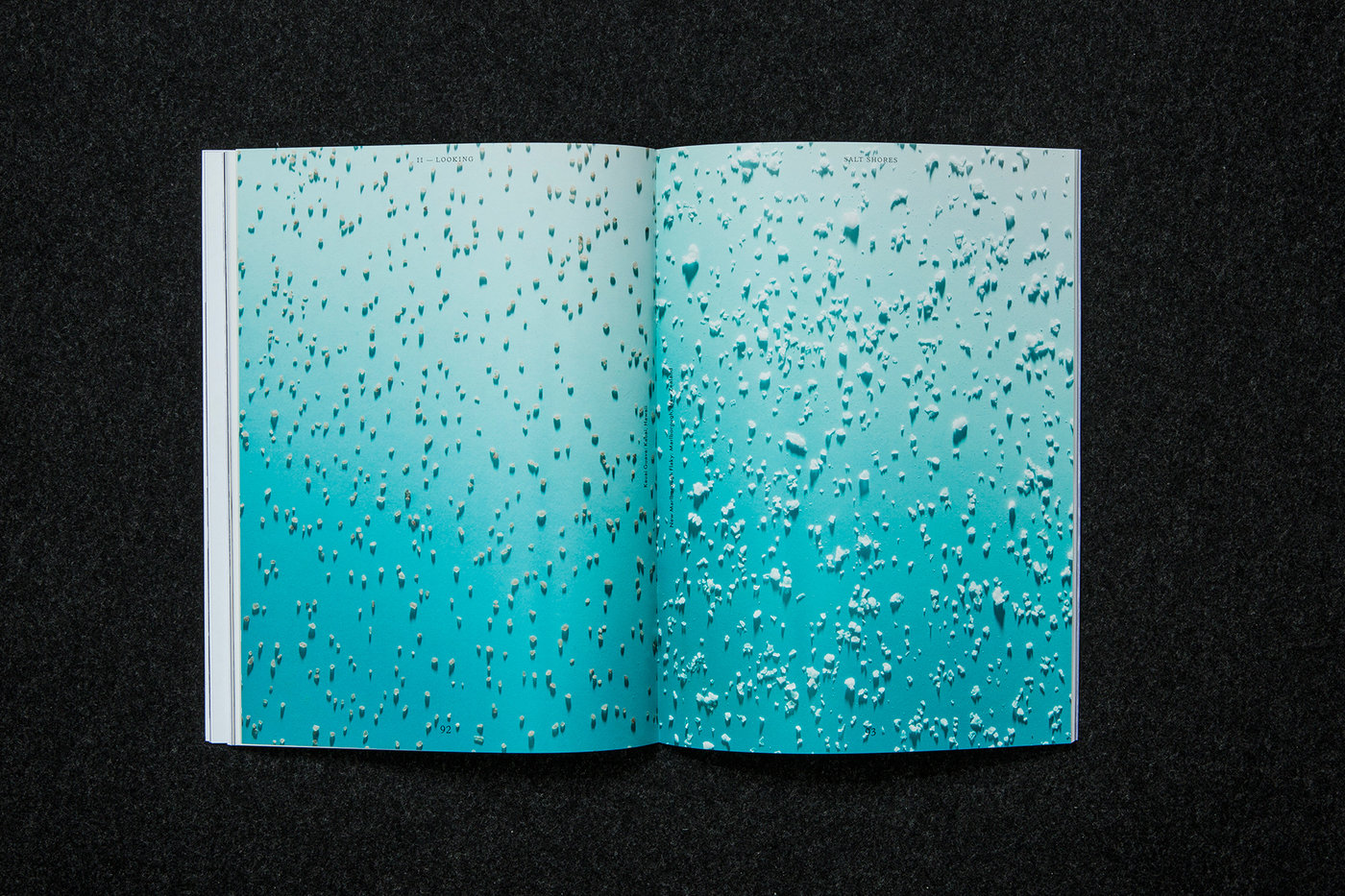
WAX Magazine was a bi-annual print publication exploring the intersection of art, culture and surfing. Each issue is organized around a unique theme and shares the stories of area surfers who are also artists, designers, authors and auteurs. Its first issue was funded in 2011. Its last issue was in 2017. A favorite photo essay was one on the various types of salt found in different oceans by Luke Stettner.

Riposte Magazine profiles bold and fascinating women who challenge power structures and stereotypes. Their interviews candidly discuss their successes & failures, their work, their passions and perspectives.
For small groups and one on ones, develop a presentation that outlines your concept and execution for your photo essay and “Special / Feature” Section. Upload your presentation to Drive. Also be prepared to walk me through your 30-40 pages of magazine content.
To be clear, these are two separate sections of your magazine. At least one (but ideally both) are content that is created by you. This can be imagery, but it can also be text.
The Baffler Magazine has a section called “The Exhibit” where they work with a different artist to create a narrative “op-art” piece surrounding the issue’s theme. Some favorites have been Gilles de Brock, Gender Fail, Jenny Odell, Paul Sahre, Félix Decombat, Ruben Pater and John Provencher.
WAX Magazine was a bi-annual print publication exploring the intersection of art, culture and surfing. Each issue is organized around a unique theme and shares the stories of area surfers who are also artists, designers, authors and auteurs. Its first issue was funded in 2011. Its last issue was in 2017. A favorite photo essay was one on the various types of salt found in different oceans by Luke Stettner.
Riposte Magazine profiles bold and fascinating women who challenge power structures and stereotypes. Their interviews candidly discuss their successes & failures, their work, their passions and perspectives.
Week 10
03/24/25
Magazine:
Dummy 1:1
03
Design all 100 pages of your magazine, plus front and back cover. Design the covers of issue 2 and 3. Print out the magazine double sided and in order, so we can flip through it and understand your issue’s pacing and structure. Your dummy can be actual size or half / quarter size, color or black and white. We will meet one on one, which means we can review your Indesign file and talk about technical details as well.
WATCH
Chloe Scheffe is a print-obsessed designer, art director, and writer, working across disciplines to tell compelling stories. Currently, she leads the art department at Here Magazine (Away), and does ongoing freelance with Verso Books and Nike. She has also worked for or with Penguin Random House, The New Yorker, The Atlantic, The New York Times Magazine, Pentagram, Metahaven, and Other Means, among others. In 2019, she was named a Young Gun. She loves to read, her eyesight is terrible, and she’s a native of the Pacific Northwest.
WATCH
Chloe Scheffe is a print-obsessed designer, art director, and writer, working across disciplines to tell compelling stories. Currently, she leads the art department at Here Magazine (Away), and does ongoing freelance with Verso Books and Nike. She has also worked for or with Penguin Random House, The New Yorker, The Atlantic, The New York Times Magazine, Pentagram, Metahaven, and Other Means, among others. In 2019, she was named a Young Gun. She loves to read, her eyesight is terrible, and she’s a native of the Pacific Northwest.
Week 11
03/31/25
Magazine:
Final Printed Magazine
03
Design your whole 100+ magazine. Print and bind the first issue of your magazine for final review. Print the covers for issue 2 and 3 as well. Consider it’s paper, printing, binding and cover method.
Design a microsite and social media post promoting your magazine. Upload your work to Drive.
Magazine Deliverables
— Issue 1: 100 Page Magazine
— 3 Articles
— 1 Photo Essay
— 1 "Special / Feature" Section
— Issue 2 & 3: Cover Design
— Website Design
— Extension: Social Media
VIDEO
Consider how short or medium form video can play a role in the promotion of your core component. This can take form of a trailer, setting the tone for your magazine. Or think how to leverage social media platforms and the impact of quick, expressive video clips.

MICROSITES
There is no shortage of great microsites, or one page self-contained interactive experiences that promote a publication or event, give a general overview of it’s contents and serve for a place to purchase a copy.
Decade
Kindling Magazine
Nebau Forst Catalog
Klima Magazine
Nosaj Thing – Continua
Island, Island
The Gentlewoman
Uncanny Valley
High School


Design a microsite and social media post promoting your magazine. Upload your work to Drive.
Magazine Deliverables
— Issue 1: 100 Page Magazine
— 3 Articles
— 1 Photo Essay
— 1 "Special / Feature" Section
— Issue 2 & 3: Cover Design
— Website Design
— Extension: Social Media
VIDEO
Consider how short or medium form video can play a role in the promotion of your core component. This can take form of a trailer, setting the tone for your magazine. Or think how to leverage social media platforms and the impact of quick, expressive video clips.
MICROSITES
There is no shortage of great microsites, or one page self-contained interactive experiences that promote a publication or event, give a general overview of it’s contents and serve for a place to purchase a copy.
Decade
Kindling Magazine
Nebau Forst Catalog
Klima Magazine
Nosaj Thing – Continua
Island, Island
The Gentlewoman
Uncanny Valley
High School
Week 12
04/07/25
Identity:
Concept Presentation
04
Use your original object as the starting point to conceive of your own self-initiated project. The project should be tangible in the real-world — an actual object that exists, and carries genuine meaning and value. Respond to a specific theme or thought uncovered during your research phase and use it as a jumping off point to make something. Design your project and show your thoughts as a presentation that walks us through concept and execution. Upload to Drive. Make sure the following points are addressed.
1. Consider the thing you want to make. Come up with it’s concept, idea or driving force. Explain how this stemmed from your object research, and why it should live in the world.
2. Start to actually design the details of your project. Create a mockup schematic of your object. If applicable, show us front, side, top and back views. This can be 3D rendered, sketched, or presented in another convincing way. Research manufacturing and see if this is something you can source or create yourself.
3. Consider the graphic language and design that will house your good (it’s visual identity). This could make its way into your presentation design. Start to think about logos, typography, color palette, iconography, etc. To be clear, we will focus on this in the coming weeks, this is not the main goal of this week. First, concept. Then execution.

BACKGROUND
Read Research and Destroy by Daniel van der Velden (B. 1971). Daniel van der Velden is a graphic designer and writer. Together with Vinca Kruk he founded Metahaven, a studio for design and research. Metahaven's work—both commissioned and self-directed—reflects political and social issues in provocative graphic design objects.

EXAMPLE PROJECT
Chengbo Yao’s Object Project started with an instrument he was learning called the Handpan. What started as an observation of the instrument evolved into an exploration of the wavelength 432 Hz, a tuning in sync to the vibrations of nature. Chengbo created musical compositions with his instrument that imitated the sounds of nature like rain, wind, thunder, fog, etc. He then created a record label and website to house his project.
Chengbo Yao Object Project PDF

EXAMPLE PROJECT
Ruben Pater created the Drone Survival Guide in 2013 responding to the prevalent use of drones by the U.S. and other countries for surveillance and warfare. The object acts as an informational piece of ephemera, showing the silhouettes of the 27 best known military drones, all to scale, and lists the countries that use them. It also acts as a camoflague device. Mirrored and reflective surfaces can act as a countermeasure for detection to drone infared cameras.
dronesurvivalguide.org

EXAMPLE PROJECTS
Sea Yu
Soo Lim
Junghoon Lee
Liam Wu
Hyewon Jang
Yeji Lee
Pablo Delcan is a designer and artist from Menorca, Spain. He is the creator of Prompt-Brush 1.0, a project and forthcoming book exploring the first non-AI generative image model. He has designed many book covers for major publishers and authors and is a visual contributor to The New York Times, where he creates images for the Opinion section and The New York Times Magazine. His work has also appeared in Le Monde, The Washington Post, and The Wall Street Journal. Forbes included him in its “30 Under 30 in Art and Style,” and he joined the Alliance Graphique Internationale in 2019. He lives with his family in upstate New York, where he works out of a barn with large letters that read “THIS PLACE.”
1. Consider the thing you want to make. Come up with it’s concept, idea or driving force. Explain how this stemmed from your object research, and why it should live in the world.
2. Start to actually design the details of your project. Create a mockup schematic of your object. If applicable, show us front, side, top and back views. This can be 3D rendered, sketched, or presented in another convincing way. Research manufacturing and see if this is something you can source or create yourself.
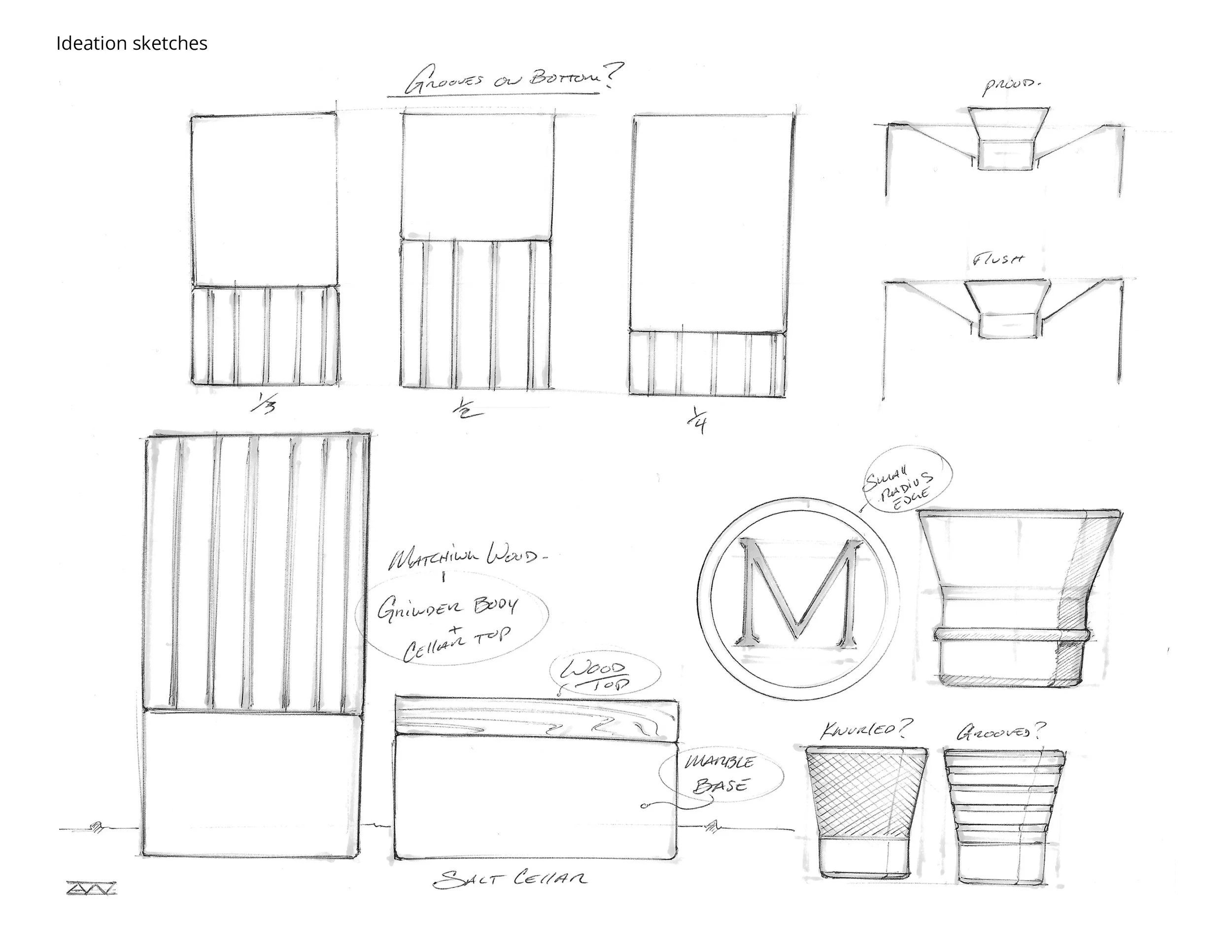
3. Consider the graphic language and design that will house your good (it’s visual identity). This could make its way into your presentation design. Start to think about logos, typography, color palette, iconography, etc. To be clear, we will focus on this in the coming weeks, this is not the main goal of this week. First, concept. Then execution.
BACKGROUND
Read Research and Destroy by Daniel van der Velden (B. 1971). Daniel van der Velden is a graphic designer and writer. Together with Vinca Kruk he founded Metahaven, a studio for design and research. Metahaven's work—both commissioned and self-directed—reflects political and social issues in provocative graphic design objects.
EXAMPLE PROJECT
Chengbo Yao’s Object Project started with an instrument he was learning called the Handpan. What started as an observation of the instrument evolved into an exploration of the wavelength 432 Hz, a tuning in sync to the vibrations of nature. Chengbo created musical compositions with his instrument that imitated the sounds of nature like rain, wind, thunder, fog, etc. He then created a record label and website to house his project.
Chengbo Yao Object Project PDF
EXAMPLE PROJECT
Ruben Pater created the Drone Survival Guide in 2013 responding to the prevalent use of drones by the U.S. and other countries for surveillance and warfare. The object acts as an informational piece of ephemera, showing the silhouettes of the 27 best known military drones, all to scale, and lists the countries that use them. It also acts as a camoflague device. Mirrored and reflective surfaces can act as a countermeasure for detection to drone infared cameras.
dronesurvivalguide.org
EXAMPLE PROJECTS
Sea Yu
Soo Lim
Junghoon Lee
Liam Wu
Hyewon Jang
Yeji Lee
Pablo Delcan is a designer and artist from Menorca, Spain. He is the creator of Prompt-Brush 1.0, a project and forthcoming book exploring the first non-AI generative image model. He has designed many book covers for major publishers and authors and is a visual contributor to The New York Times, where he creates images for the Opinion section and The New York Times Magazine. His work has also appeared in Le Monde, The Washington Post, and The Wall Street Journal. Forbes included him in its “30 Under 30 in Art and Style,” and he joined the Alliance Graphique Internationale in 2019. He lives with his family in upstate New York, where he works out of a barn with large letters that read “THIS PLACE.”
Week 13
04/14/15
Identity:
Prototype
04
Create a physical prototype of your project. This can be full size or a scale model. Design and produce the packaging, housing or other elements that are included in your final project. Troubleshoot any roadblocks and anticipate shortcomings before our final critique.
Refine your core visual identity components: Logo / wordmark, typography, color palette, etc. Formalize your components into a Guidelines Document similar to the examples we’ve reviewed in class. Create a page or section for each of the points below. Upload your guidelines document to Drive. Include at least two deliverables that accompany your project. This could be a: video, microsite, social post, zine, book, a tag or label, etc. Show how your system works in practice across different mediums and materials.
SYSTEM BRAND GUIDELINES DOCUMENT
1. Intro / concept
2. Logo
3. Wordmark
4. Typography (primary, secondary...)
5. Color Palette
6. Art Direction / Photo Style
7. Iconography
8. Two+ Deliverables

Background
Standards is a platform to build Identity Guidelines Documents. It features a number of brand books. These can be great resources that show how a visual identity can be broken up into components. The components define the overall visual language, and keep a project speaking in the same tone throughout.
Examples
Cash App
RISD by Gretel
OKO
DevRev
Verso Book Club by No Ideas
Vespucci Group by No Ideas
Refine your core visual identity components: Logo / wordmark, typography, color palette, etc. Formalize your components into a Guidelines Document similar to the examples we’ve reviewed in class. Create a page or section for each of the points below. Upload your guidelines document to Drive. Include at least two deliverables that accompany your project. This could be a: video, microsite, social post, zine, book, a tag or label, etc. Show how your system works in practice across different mediums and materials.
SYSTEM BRAND GUIDELINES DOCUMENT
1. Intro / concept
2. Logo
3. Wordmark
4. Typography (primary, secondary...)
5. Color Palette
6. Art Direction / Photo Style
7. Iconography
8. Two+ Deliverables
Background
Standards is a platform to build Identity Guidelines Documents. It features a number of brand books. These can be great resources that show how a visual identity can be broken up into components. The components define the overall visual language, and keep a project speaking in the same tone throughout.
Examples
Cash App
RISD by Gretel
OKO
DevRev
Verso Book Club by No Ideas
Vespucci Group by No Ideas
Week 14
04/21/25
Identity:
Optional 1:1
04
Class is optional, finish and hand in your portfolio on time. Upload your PDF, go hang out in the park, take a breath. If you’d like to discuss your project or extensions you can sign up for a one-on-one session.
Week 15
04/28/25
Object Project:
Final Review
04
Complete your final, physical product for review. This should be a convincing version of your concept, produced to scale. Develop the packaging or other materials for your project, including any other supplemental deliverables like merch, social media campaings, websites, etc. The sky is hte limit.
Complete your visual identity guidelines and any other digital deliverables you would like to show. Upload to Drive for presentation.
Along with your product and guidelines document, bring in your research book and magazine from this semester.
Complete your visual identity guidelines and any other digital deliverables you would like to show. Upload to Drive for presentation.
Along with your product and guidelines document, bring in your research book and magazine from this semester.
Week 00
04/28/25
Final PDF:
Upload to Google Drive
00
Please create a PDF with your work from the fall and spring semester. Upload everything by Friday, May 1st. Upload your final work to Google Drive in a folder labeled with your name.